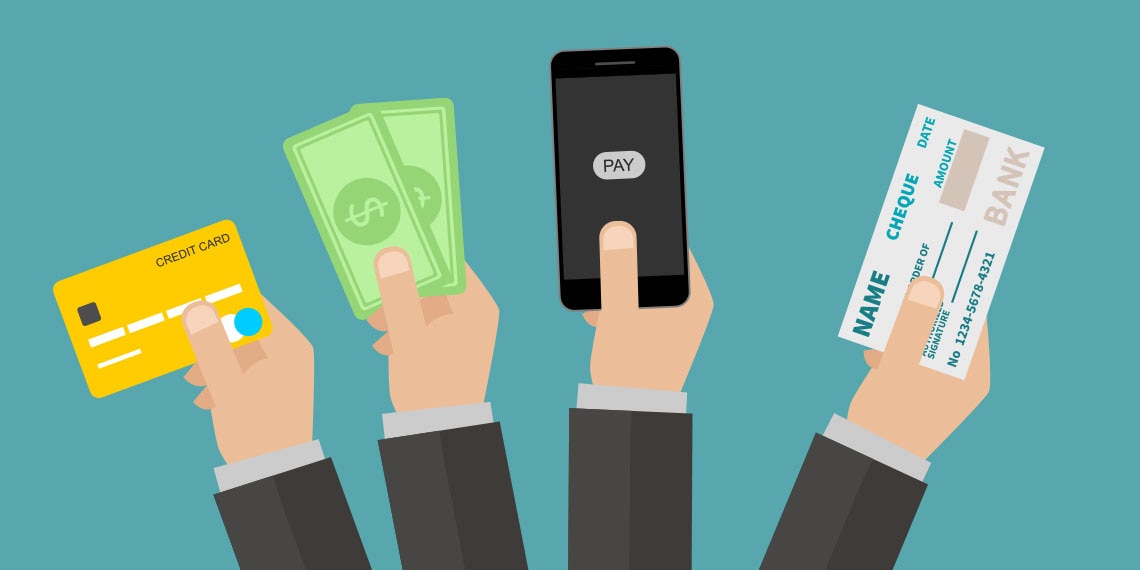
Consumers like options. Not only for what you buy, or where you buy it—but also how you buy it. Gone are the days of cold hard cash being the only form of payment. In addition to your dollars, there are a wealth of other payment methods you can choose from. Some methods work better than others for certain situations, and there are advantages and disadvantages to each depending on your spending and shopping habits.
Let’s dive into the various payment methods and the value they offer:
Cash Pros
It’s convenient.
Retailers almost always accept cash, so it’s easy to make the purchases you want and need—where and when you need them.
It’s limiting (in a good way).
You can only spend as much as you have; when it’s gone, it’s gone. Carrying cash can help you avoid overspending and running down your bank account.
It’s physical.
Spending cash is a physical act of giving your money away—versus simply swiping a card. This can evoke an emotional response and help you stay more aware of how much you’re spending.
It’s free.
There are no fees or interest charges associated when using cash, like there can be with other forms of payment.
Cash Cons
It’s limiting (also in a bad way).
When you only carry cash, you may be less prepared to cover emergencies that cost more than the amount you have on hand.
It’s less secure.
Losing a wallet full of credit cards is inconvenient, but it’s easy to call your financial institution to cancel them. When you lose a wallet full of cash, it’s probably gone for good.
Check Pros
Sometimes, it’s necessary.
If you receive a medical bill for a provider who doesn’t offer a payment portal, mailing a check is the next best option.
It leaves a paper trail.
Writing a check with a carbon copy or recording the transaction in a ledger creates a record of your payment if you needed proof of payment in the future.
It’s secure.
Many cashiers are still required to check a recipient’s ID against their signature on the check, which helps reduce the chance of fraud.
Check Cons
It can take time.
Sometimes there can be a delay in processing checks, so the money may not be taken out of r put into your account right away.
It may not be accepted.
Yes, people still use checks—but not as much as they used to. Therefore, some retailers may no longer accept them as a form of payment.
It’s not free.
While paying with a check may be free, actually purchasing them isn’t. Plus, if you’re mailing a check, add in the expense of stamps to use when mailing payment.
Credit Card Pros
It offers fraud protection.
In the event your credit card is stolen, you can instruct your financial institution to cancel it. In the event someone else uses your card or account number to make purchases, you would only be responsible for up to $50 according to the Fair Credit Billing Act. Your bank may even have a policy that covers all unauthorized use.
It’s widely accepted.
Nearly all retailers accept at least some types of credit cards, so it’s easy to find locations to shop. Hotels and airlines may also require a card to be on file when booking.
It can earn rewards.
Many credit cards come with cash back rewards, rebates or discounts when you use your card.
It can cover emergencies.
Having a credit card may allow you to manage expenses that exceed the cash you have on hand, and pay them off over time.
Credit Card Cons
It can accrue interest and late fees.
If you are late making a payment or don’t pay off the entire balance each much, you may be charged fees or interest for the remaining balance.
It could cause overspending.
If you don’t keep close track of your balance every time you swipe your card, you could run up a high balance before you know it.
It can feature restrictive credit limits.
Credit card come with credit limits (based on your credit history) with which can restrict your purchase options. Though credit limits can also protect you from accruing too much debt.
Mobile Payment Pros
It’s easy to access.
Apps like PayPal and Venmo are mobile friendly, so you can send or receive payments right from your phone while you’re on the go.
It’s great for peer-to-peer transactions.
Splitting lunch but don’t have cash on hand? Need to pay back a friend across town? Mobile payment apps make it fast and easy securely transfer funds online.
It keeps record of payments.
You get a receipt from each transaction you send or receive, making it easy to track and manage your expenses.
Mobile Payment Cons
It can limit your transaction amounts.
Some mobile payment apps set limits on how much money you can transfer per transaction and per month.
It may not be accepted everywhere.
Retailers may or may not accept mobile apps as a form of payment, depending on which one you use.
Knowing your payment options and knowing how they fit your lifestyle can help you be more prepared for any and every expense—from everyday buys to emergency purchases.